Horizontal Scaling Deployment Strategies
Weaviate offers two complementary superpowers for scaling your deployment: sharding and replication. Sharding divides your data so it can be spread out across multiple nodes, allowing you to handle datasets far larger than a single machine could process. Meanwhile, replication creates redundant copies of your data, ensuring high availability even when individual nodes fail or need maintenance. While each scaling method shines on its own, the true magic happens when they join forces.
Let's explore how you can harness these capabilities to build a deployment that's both massive in scale and rock-solid in reliability!
Scaling Methods
Section titled “Scaling Methods”Replication
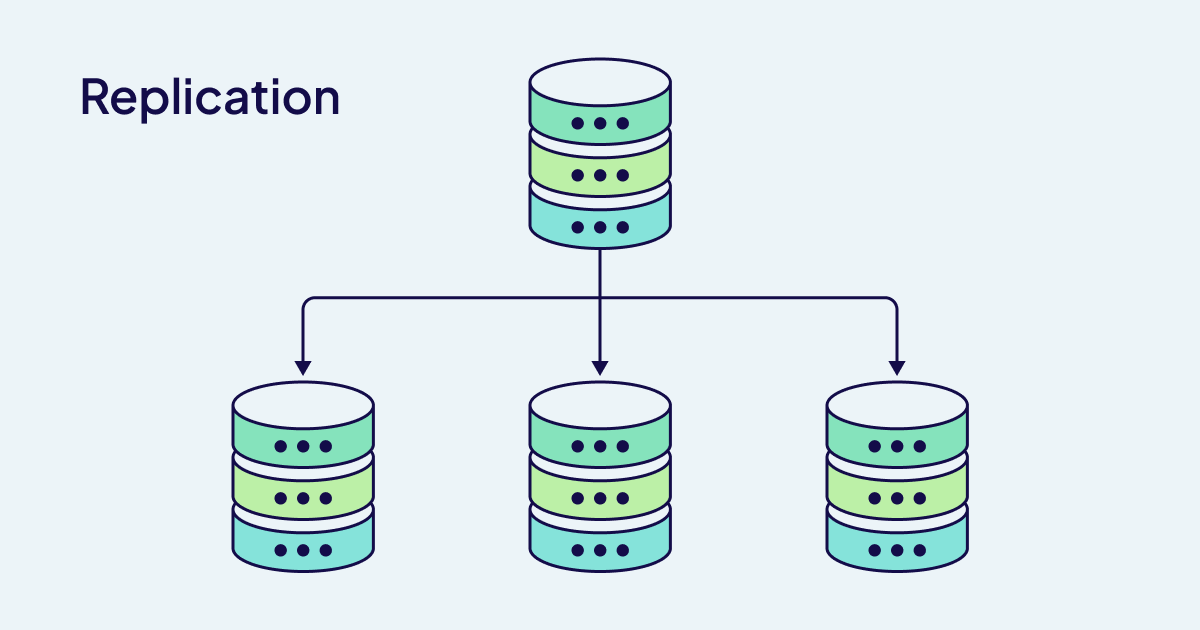
Section titled “Replication”Replication creates redundant copies of your data, it is useful when your data needs to be highly available.
Sharding
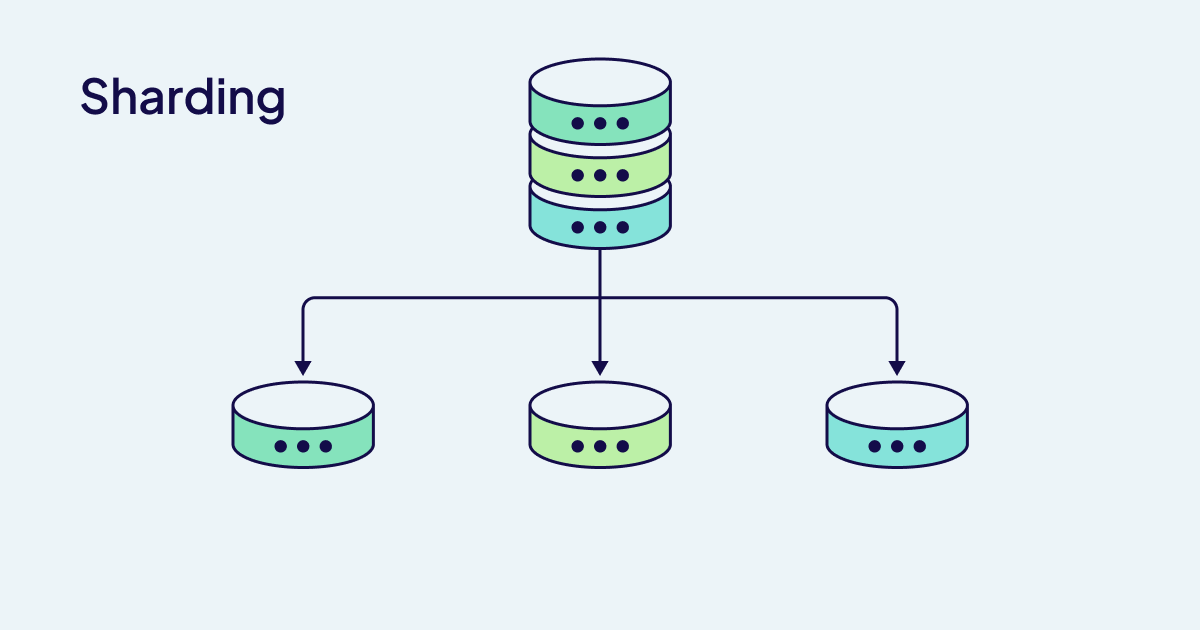
Section titled “Sharding”Sharding divides data across nodes, it is useful when your dataset is too large for just a single node.
Choosing your strategy
Section titled “Choosing your strategy”| Requirement/Goal | Sharding | Replication | Both Combined | Primary Consideration |
|---|---|---|---|---|
| Handle dataset too large for single node | Yes | No | Yes | How much data are you storing? - Vector dimensions and count determine memory requirements - Sharding divides this across nodes |
| Improve query throughput | Maybe* | Yes | Yes | Is your workload read-heavy? - Replication allows distributing read queries across nodes - Sharding may help with certain query patterns |
| Accelerate data imports | Yes | No | Yes | Is import speed a priority? - Sharding enables parallel processing of imports - Replication adds overhead during imports |
| Ensure high availability | No | Yes | Yes | Can you tolerate downtime? - Replication provides redundancy if nodes fail - Without replication, shard loss = data loss |
| Enable zero-downtime upgrades | No | Yes | Yes | How critical is continuous operation? - Replication allows rolling updates - Production systems typically require this capability |
| Optimize resource utilization | Yes | Maybe* | Maybe* | Are you resource-constrained? - Sharding distributes load efficiently - Replication adds resource overhead |
| Geographic distribution | No | Yes | Yes | Do you need multi-region support? - Replicas can be deployed across regions - Reduces latency for geographically distributed users |
*This may serve as a partial solution and will depend on your configuration.
Sharding: Divide and Conquer
Section titled “Sharding: Divide and Conquer”You've made the decision to shard your data, now let's get it configured:
from weaviate.classes.config import Configureclient.collections.create( "Article", sharding_config=Configure.sharding( virtual_per_physical=128, desired_count=1, desired_virtual_count=128, ),)import { configure } from 'weaviate-client';Parameters
Section titled “Parameters”These parameters are used to configure your collection shards:
| Parameter | Type | Description |
|---|---|---|
desiredCount |
integer | Immutable, Optional. Controls the target number of physical shards for the collection index. Defaults to the number of nodes in the cluster, but can be explicitly set lower. If set higher than the node count, some nodes will host multiple shards. |
virtualPerPhysical |
integer | Immutable, Optional. Defines how many virtual shards correspond to one physical shard, defaulting to 128. |
desiredVirtualCount |
integer | Read-only. Shows the target total number of virtual shards, calculated as desiredCount * virtualPerPhysical. |
Replication: An army of clones
Section titled “Replication: An army of clones”Configure your data's replication to ensure it's always available:
Configure replication settings, such as async replication and deletion resolution strategy.
from weaviate.classes.config import Configure, ReplicationDeletionStrategyclient.collections.create( "Article", replication_config=Configure.replication( factor=3, deletion_strategy=ReplicationDeletionStrategy.TIME_BASED_RESOLUTION, async_config=Configure.Replication.async_config( hashtree_height=16, frequency=30, ), ),)import { configure } from 'weaviate-client';curl \
-X POST \
-H "Content-Type: application/json" \
-d '{
"class": "Article",
"properties": [
{
"dataType": [
"string"
],
"description": "Title of the article",
"name": "title"
}
],
"replicationConfig": {
"factor": 3,
"deletionStrategy": "TimeBasedResolution"
}
}' \
http://localhost:8080/v1/schemaIn a highly available environment, combining sharding and replication leverages the power and
capabilities of both methods to be a dynamic duo that keeps your deployment highly available.
If given the opportunity, those two techniques will be your deployment's dynamic duo.
Specifically using the ASYNC_REPLICATION environment variables introduced in the 1.29 release
will allow you to unleash the full power of horizontal scaling!
Questions and feedback
Section titled “Questions and feedback”Have a question or feedback? Here's how to reach us.