Databricks + Weaviate
Databricks offers a wide range of models for natural language processing and generation. Weaviate seamlessly integrates with Databricks' Foundation Model APIs, allowing users to leverage Databricks' models directly from the Weaviate Database.
These integrations empower developers to build sophisticated AI-driven applications with ease.
Integrations with Databricks
Section titled “Integrations with Databricks”Embedding models for vector search
Section titled “Embedding models for vector search”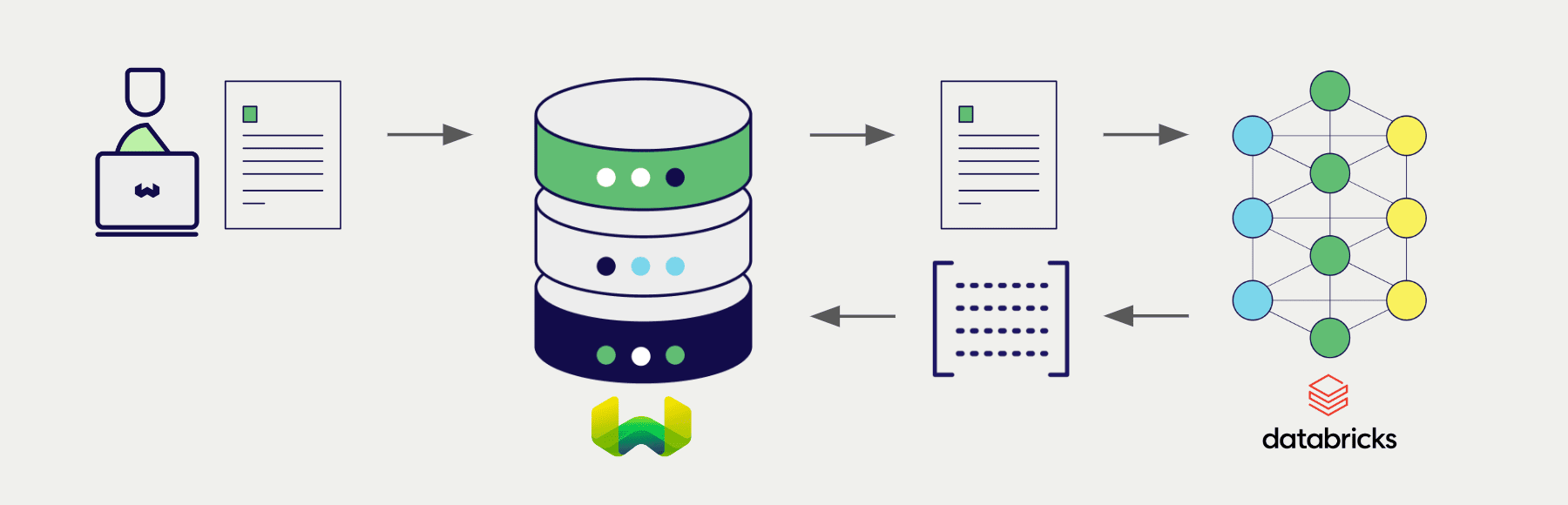
Databricks' embedding models transform text data into vector embeddings, capturing meaning and context.
Weaviate integrates with Databricks' embedding models to enable seamless vectorization of data. This integration allows users to perform semantic and hybrid search operations without the need for additional preprocessing or data transformation steps.
Databricks embedding integration page
Generative AI models for RAG
Section titled “Generative AI models for RAG”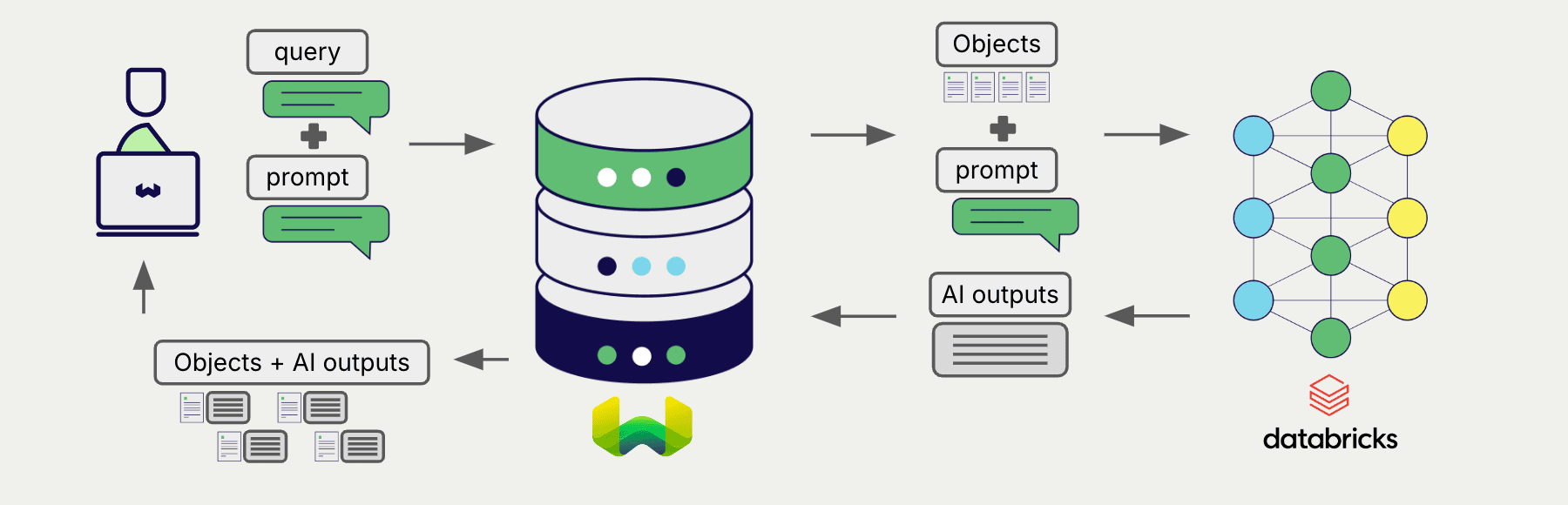
Databricks' generative AI models can generate human-like text based on given prompts and contexts.
Weaviate's generative AI integration enables users to perform retrieval augmented generation (RAG) directly from the Weaviate Database. This combines Weaviate's efficient storage and fast retrieval capabilities with Databricks' generative AI models to generate personalized and context-aware responses.
Databricks generative AI integration page
Summary
Section titled “Summary”These integrations enable developers to leverage Databricks' powerful models directly within Weaviate.
In turn, they simplify the process of building AI-driven applications to speed up your development process, so that you can focus on creating innovative solutions.
Get started
Section titled “Get started”You must provide a valid Databricks personal access token to Weaviate for these integrations. Refer to the Databricks documentation for instructions on generating your personal access token in your workspace.
Then, go to the relevant integration page to learn how to configure Weaviate with the Databricks models and start using them in your applications.
Questions and feedback
Section titled “Questions and feedback”Have a question or feedback? Here's how to reach us.